🪙

Quarters Worth Money 2026

Complete Guide to Valuable Washington Quarters  ·  1932–1998

Quarters worth money — rare and valuable Washington quarters collection

Discovering Quarters Worth Money in Your Collection

Hidden among the ordinary coins in your pocket or that forgotten jar on your shelf, there may be Washington quarters worth far more than twenty-five cents. Since 1932, the United States Mint has produced Washington quarters spanning decades of American history — and collectors today eagerly seek out the rare dates, distinctive mint marks, and error varieties that set certain coins apart from the rest.

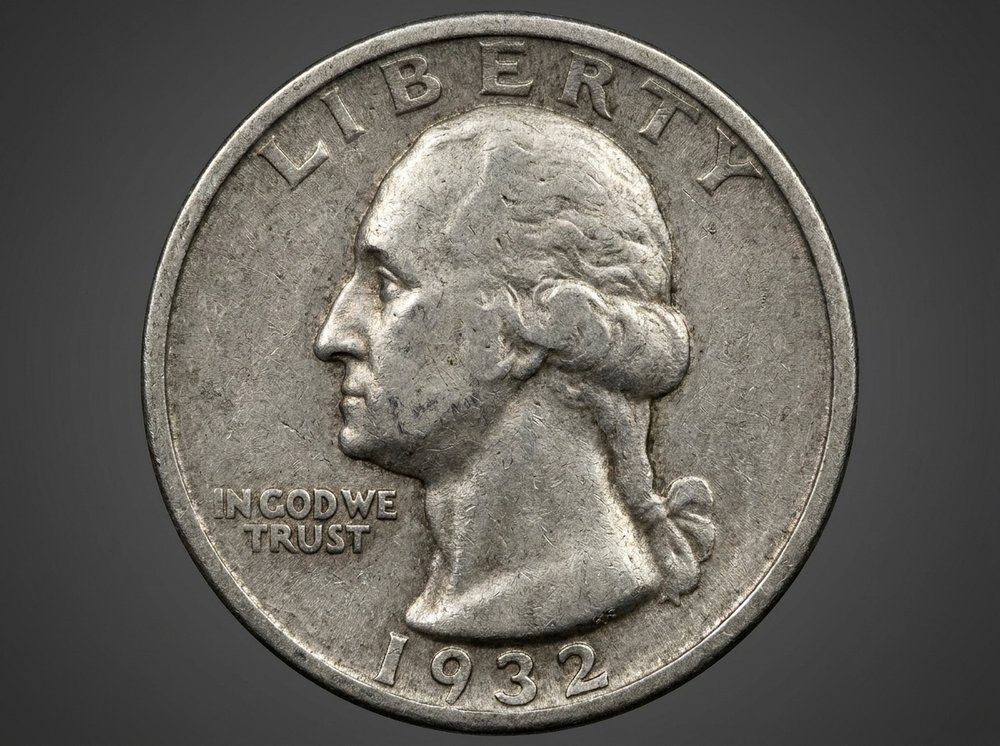
The key to finding valuable quarters lies in understanding what makes specific coins command such extraordinary prices. The legendary 1932-D quarter, of which only 436,800 were struck, has sold for over $143,000 in top condition. Lesser-known treasures from the 1940s and 1950s regularly surface at auction for tens of thousands of dollars. Pre-1965 silver quarters carry intrinsic metal value regardless of their numismatic premium. This comprehensive guide reveals the top 100 most valuable Washington quarters based on verified auction records — helping you determine which coins in your collection deserve a much closer look.

Top 100 Most Valuable Washington Quarters 2026

Ranked by highest confirmed auction prices and current market values

Rank Quarter Record Price
Rare quarters worth money — identification guide for collectors
Free Coin Identifier App

Identify Any Coin Instantly with CoinKnow

Not sure if that quarter in your hand is a hidden treasure? CoinKnow makes it effortless. Simply snap a photo with your smartphone and the app's AI-powered recognition engine instantly identifies the coin's date, mint mark, grade, and current market value — whether you're sorting pocket change, appraising an inherited collection, or hunting for valuable pieces at a coin show. CoinKnow is free to download on both iOS and Android.

The Complete History of Washington Quarters

Washington Quarter Introduction (1932)

The Washington quarter made its debut in 1932, commissioned to mark the 200th anniversary of George Washington's birth. Sculptor John Flanagan's portrait of the first president replaced the Standing Liberty design that had graced quarters since 1916. Three mints participated in that inaugural year: Philadelphia (no mint mark), Denver (D), and San Francisco (S). Production totals were modest across the board, but the Denver and San Francisco issues were struck in particularly small quantities — a circumstance that would make the 1932-D and 1932-S among the most coveted coins in all of American numismatics, with the 1932-D now commanding prices exceeding $143,000 in the finest grades.

Depression Era Quarters (1933–1939)

The hardships of the Great Depression left their mark on quarter production. No quarters were minted at all in 1933, as existing stocks were more than sufficient for a contracting economy. Coinage resumed in 1934 from Philadelphia and Denver, with San Francisco rejoining in 1935. All quarters of this era were struck in 90% silver and 10% copper, weighing 6.25 grams. The lean years and fluctuating mintage figures produced several key dates — especially from San Francisco — that remain highly prized by collectors of quarters worth money today.

World War II Quarters (1940–1945)

Unlike nickels and certain other denominations, Washington quarters continued to be struck in their standard 90% silver composition throughout the Second World War. All three mints operated during this period, supplying the increased demand driven by a wartime economy. While overall mintages rose, many specific date-and-mint combinations remain genuinely scarce in fully uncirculated condition. Proof specimens from these years — struck only at Philadelphia — are particularly valuable, representing some of the finest examples known among quarters worth money from the wartime era.

Post-War Silver Quarters (1946–1964)

The postwar decades brought steady, reliable quarter production from all three mints. Silver remained the composition of choice through 1964 — making every Washington quarter from this entire 32-year span worth at minimum its silver melt value today. Certain dates stand out for their low mintages, most notably the 1949-D. The San Francisco Mint phased out regular circulation strikes after 1954, redirecting its resources to proof coinage. Rising silver prices in the early 1960s prompted widespread hoarding of silver coins, ultimately convincing Congress to authorize a composition change by 1965. All quarters from 1932 through 1964 contain 90% silver.

Transition to Clad Quarters (1965–1974)

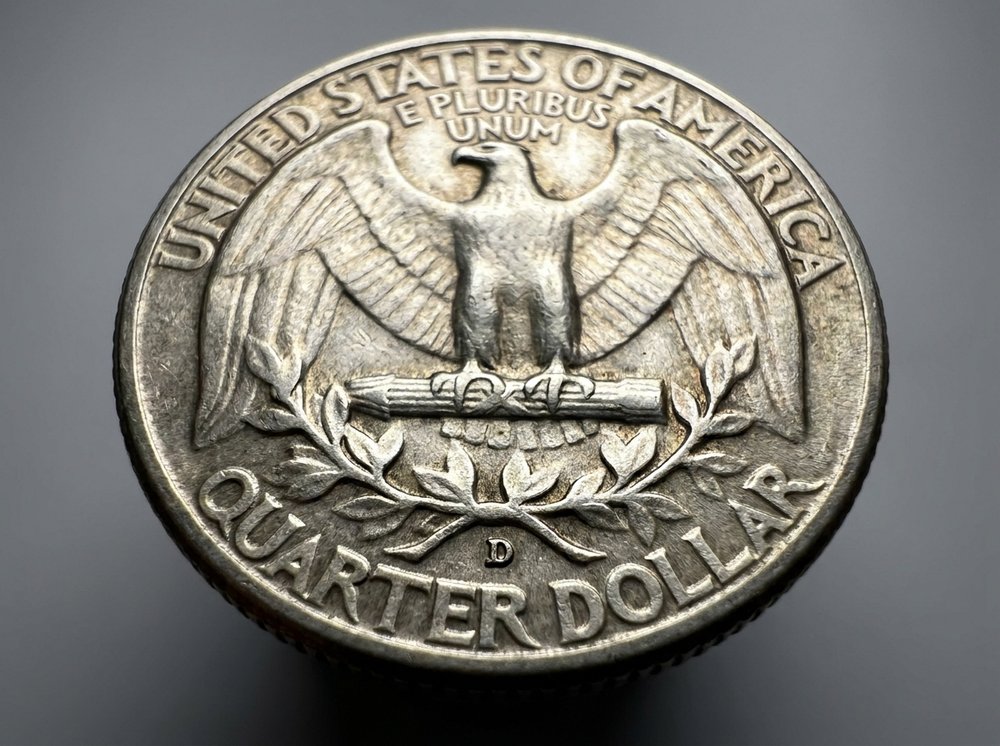
The Coinage Act of 1965 fundamentally transformed the Washington quarter, replacing its 90% silver composition with a copper-nickel clad sandwich — a pure copper core bonded with outer layers of 75% copper and 25% nickel. To discourage hoarding of the new composition, the Mint omitted mint marks entirely from 1965 through 1967. Philadelphia and Denver then dramatically ramped up production to meet circulation demand. Although the vast majority of clad quarters are common, a handful of rare Washington quarter varieties and errors from this transition era attract serious collector interest and command meaningful premiums.

Valuable quarters worth money throughout history

Bicentennial Quarters (1975–1976)

The United States Bicentennial celebration of 1776–1976 inspired a special commemorative design for the quarter, replacing the traditional heraldic eagle reverse with Jack L. Ahr's image of a colonial drummer boy. All quarters dated 1975 and 1976 carry the dual date "1776–1976." Regular copper-nickel clad versions circulated by the billions, while silver-clad collector versions were struck at San Francisco in both proof and uncirculated finishes. Certain error varieties — particularly doubled die obverses on 1976-D coins — elevate select Bicentennial quarters well above their face or intrinsic value.

Modern Washington Quarters (1977–1998)

After the Bicentennial, the original reverse design returned and Washington quarters settled into a pattern of high-volume production at Philadelphia and Denver, supplemented by proof coinage from San Francisco. Billions of coins were minted for circulation each year, making most dates exceptionally common. However, specialists actively pursue Deep Cameo (DCAM) proof coins, doubled die varieties, and scarce business-strike issues such as the 1983-P. This era closed in 1998, immediately preceding the launch of the landmark 50 State Quarters program that would transform quarter collecting for a generation.

Special Mint Set Quarters (1965–1967)

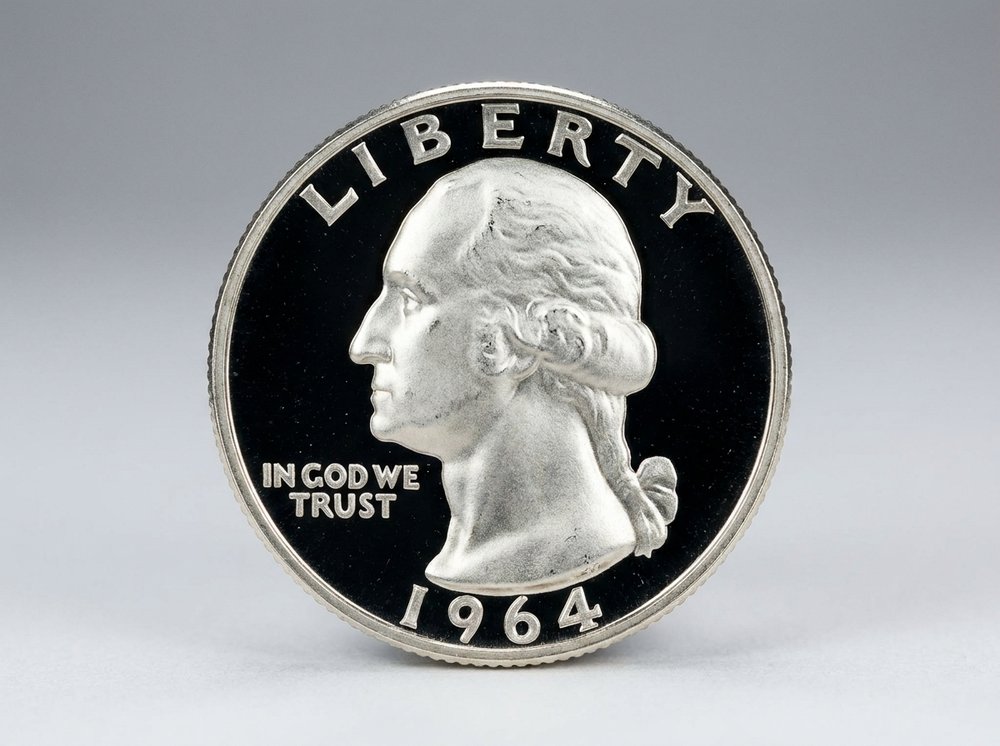
During the three years that regular proof sets were suspended, the Mint offered Special Mint Sets (SMS) as an alternative for collectors. SMS quarters received enhanced preparation and exhibited a finish somewhere between a business strike and a true proof. Coins from these sets, particularly those with exceptional strike quality and surface appeal, attract collector premiums. The extraordinarily rare 1964 SMS quarter — struck in the year before the official SMS program began — stands apart as one of the most valuable and enigmatic coins in the Washington quarter series.

Proof Quarter Production (1936–1998)

Proof coinage for Washington quarters began in 1936 and continued, with interruptions during World War II and the 1965–1967 clad transition, through the end of the series. These specially prepared coins — struck on polished planchets with polished dies — were produced exclusively for collectors. Early proofs from the 1930s through the 1950s are genuinely rare and command substantial prices at auction. Modern proofs from San Francisco feature the mirror-like fields and frosted devices prized by collectors; those with strong contrast are graded Deep Cameo (DCAM) and carry the highest premiums. Silver proofs, offered alongside clad versions starting in 1992, are consistently worth more than their clad counterparts.

Error and Variety Quarters (1932–1998)

Throughout the Washington quarter series, mistakes and anomalies at the mint have created a rich landscape of collectible errors and die varieties. Doubled die obverses (DDO) and reverses (DDR) — where the design elements appear doubled due to a misaligned hub impression — are among the most visually striking and valuable. Off-center strikes, wrong planchet errors, and overmintmarks like the classic 1950-D/S add further depth to the field. The 1952 "Superbird" variety, named for its dramatic die crack, has its own devoted following. For a thorough look at Quarters Worth Money including error varieties and their current valuations, professional grading services such as PCGS and NGC remain the essential final word on authenticity and grade.

Frequently Asked Questions About Quarters Worth Money

What quarters worth money should I look for in my collection?
+
The most valuable quarters worth money include the 1932-D Washington quarter ($143,750), 1932-S ($45,500), and key dates from the 1930s through the 1960s. Focus first on the date and mint mark — the D and S marks from early decades matter enormously. High-grade uncirculated examples command substantial premiums over worn specimens. All quarters struck before 1965 contain 90% silver and are worth at least their melt value. Check carefully for doubled dies, off-center strikes, and overmintmarks, as these varieties multiply a coin's value significantly.
How do I identify quarters worth money in circulation?
+
Start with the basics: check the date and mint mark. Key dates such as 1932-D, 1932-S, and other low-mintage years from the 1930s and 1940s are immediately worth setting aside. Examine condition carefully — even modest improvements in grade can translate to dramatic price differences. A magnifying glass helps reveal doubled dies, repunched mint marks, and other anomalies. Any quarter dated 1964 or earlier has silver content worth several times face value regardless of condition. Use a postal scale to check weight; genuine silver quarters weigh 6.25 grams, while clad quarters weigh 5.67 grams.
Why are certain quarters worth money more than others?
+
Value in Washington quarters flows from four primary sources: rarity, condition, composition, and collector demand. Low mintage years like 1932-D and 1932-S are scarce by definition; few examples were ever made. Silver composition gives pre-1965 coins intrinsic metal value independent of numismatic premium. Exceptional condition — meaning an uncirculated coin that has never changed hands in commerce — creates scarcity within an already limited population. Mint errors and die varieties add another layer of uniqueness. Historical significance, such as first-year issues or dramatic varieties, further elevates collector interest and auction prices.
What makes the 1932-D quarter so extraordinarily valuable?
+
The 1932-D stands alone as the lowest mintage regular-issue Washington quarter ever produced, with just 436,800 coins struck at the Denver Mint. This was also the inaugural year of the entire Washington quarter series — adding historical significance on top of genuine scarcity. The vast majority of surviving 1932-D quarters saw heavy circulation use, so examples in mint state condition are extraordinarily rare. Combine that scarcity with sustained, passionate collector demand and you get a coin that regularly surpasses $143,750 at major auction houses for top specimens.
Are silver quarters worth money today?
+
Absolutely. Every Washington quarter struck from 1932 through 1964 contains 90% silver and 10% copper, giving it a silver melt value well above face value regardless of date or condition. At current silver prices, even the most common circulated silver quarter is typically worth $4–6. Rare dates, high-grade examples, and error varieties can be worth hundreds or thousands beyond their silver content. The 1932-D and 1932-S, for instance, are worth tens of thousands of dollars in any condition. Never spend a pre-1965 quarter without checking its collector value first.
Which mint marks indicate quarters worth money?
+
Mint marks are often the single most important factor in identifying valuable Washington quarters. The "D" (Denver) mint mark on a 1932 quarter signals the rarest major date in the entire series. "S" (San Francisco) marks from the 1930s through the early 1950s frequently indicate lower mintages and higher values. Coins with no mint mark were struck at Philadelphia. An important note: mint marks moved from the coin's reverse to the obverse in 1968. Overmintmarks — such as the famous 1950-D/S, where a Denver punch was applied over a previously struck San Francisco mark — represent particularly sought-after error varieties.
What error quarters worth money should collectors seek?
+
Error quarters worth serious money include doubled die obverses (DDO), doubled die reverses (DDR), off-center strikes, wrong planchet errors, and repunched mint marks. Standout examples include the 1937 DDO, the 1944-S DDO FS-101, the 1976-D DDO FS-101, and the overmintmark variety 1950-D/S. The 1952 "Superbird" FS-901 — named for a dramatic die crack through the eagle's tail — has its own dedicated collector following. Authentication through PCGS or NGC is essential before assuming any coin is a genuine error; look-alikes and post-mint damage are common. Even minor errors on otherwise common dates can multiply value several times over.
How much are proof quarters worth money in today's market?
+
Proof quarter values vary dramatically by year, series, and grade. Deep Cameo (DCAM) proofs — those with the sharpest contrast between frosted design elements and mirror-like fields — command the highest prices. Early proofs from the 1930s through the 1950s can reach thousands of dollars in perfect condition; the 1936 proof in top grade has exceeded $10,000. Modern San Francisco proofs from the 1970s onward are generally affordable for collectors at $5–50, though DCAM examples of certain dates fetch significantly more. Silver proofs introduced in 1992 are consistently worth more than their clad equivalents. Even minor contact marks can drastically reduce a proof's grade and value.
Where can I sell my quarters worth money?
+
Quarters worth serious money can move through several channels, each with its own tradeoffs. Major auction houses such as Heritage Auctions and Stack's Bowers reach the broadest audience of serious collectors and tend to realize the highest prices for important coins. Local coin dealers offer immediate payment but typically pay 60–80% of retail value. eBay and other online marketplaces put your coins in front of millions of buyers, though proper photography, accurate descriptions, and insured shipping are essential. Coin shows give you direct access to dealers and collectors. For any quarter potentially worth over $200, professional grading beforehand almost always increases both the sale price and buyer confidence.
Should I get my quarters professionally graded?
+
Professional grading by PCGS or NGC is strongly recommended for any Washington quarter that appears rare, high-grade, or potentially error-affected. These services authenticate the coin, assign an objective numerical grade, and encapsulate it in a tamper-evident holder — providing buyers with confidence they cannot get from an ungraded coin. Grading fees range from roughly $20 to $100 or more depending on service tier and turnaround time. For quarters potentially worth over $200, the cost of grading is nearly always justified by the increase in marketability and realized price. Key dates, uncirculated specimens, proof coins, and error varieties benefit most from this professional endorsement.

Summary: Quarters Worth Money

Building a working knowledge of quarters worth money means learning to read the combination of date, mint mark, condition, and variety that transforms an ordinary coin into something remarkable. From the storied 1932-D — the crown jewel of the Washington quarter series at $143,750 — to elusive proof specimens, transitional issues, and production errors scattered across seven decades of coinage, the opportunities for discovery are genuine and ongoing. Pre-1965 silver quarters carry intrinsic metal value that puts every single one of them above face value, while specific dates and grades command premiums that can reach five or six figures. Whether you are searching pocket change, appraising an inherited collection, or actively building a numismatic portfolio, the knowledge of which quarters are truly worth money remains your most valuable tool. Examine every quarter carefully before spending it — the next remarkable find may already be in your hand.